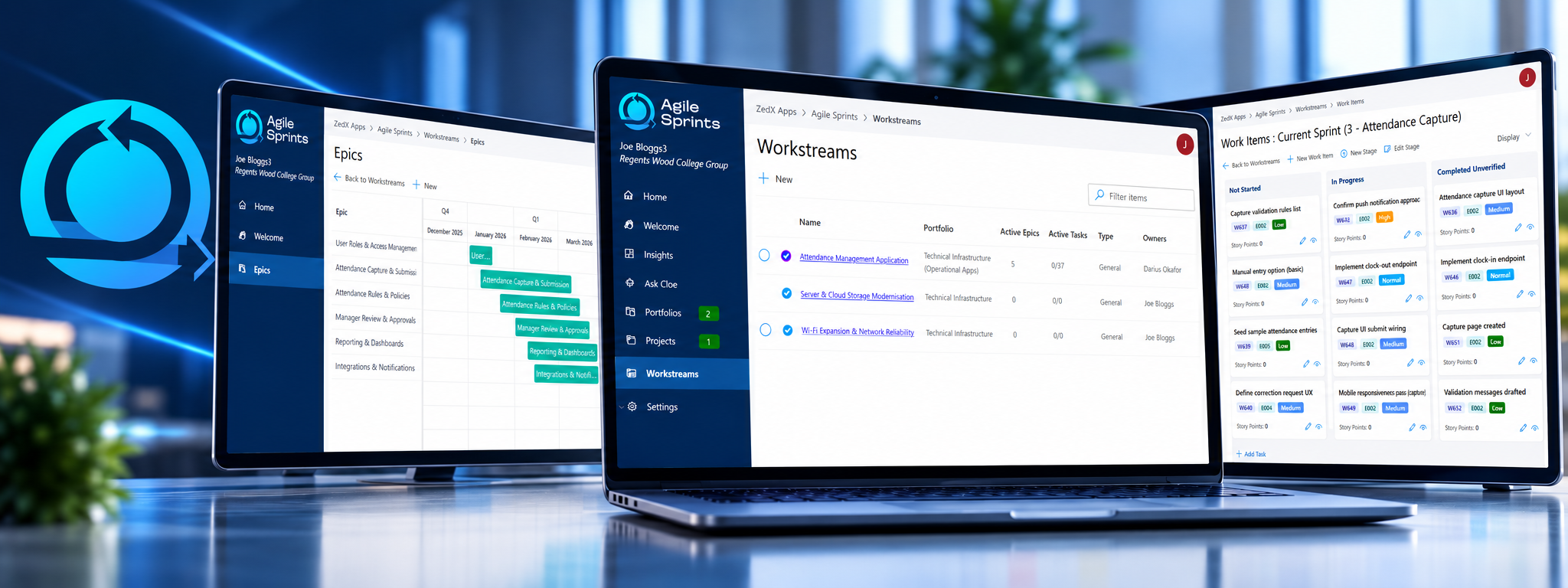
Scrum-based sprint and release management for delivery teams
Agile Sprints is a dedicated ZedX application designed for teams delivering work using Scrum and sprint-based Agile methods.
It provides a structured environment for managing epics, stories, sprints, and releases, helping teams plan work clearly, track progress accurately, and deliver predictably.
By focusing on sprint execution, team capacity, and delivery flow, Agile Sprints supports effective Agile delivery without introducing unnecessary process or governance overhead.

Manage epics, user stories, and sprint backlogs

Plan sprints using story points and team capacity

Visualise work using configurable sprint boards

Support daily stand-ups and sprint reviews

Track sprint progress in real time

Manage releases across one or more sprints

Assign stories to planned release versions

Measure velocity and sprint performance

Control access using role-based permissions
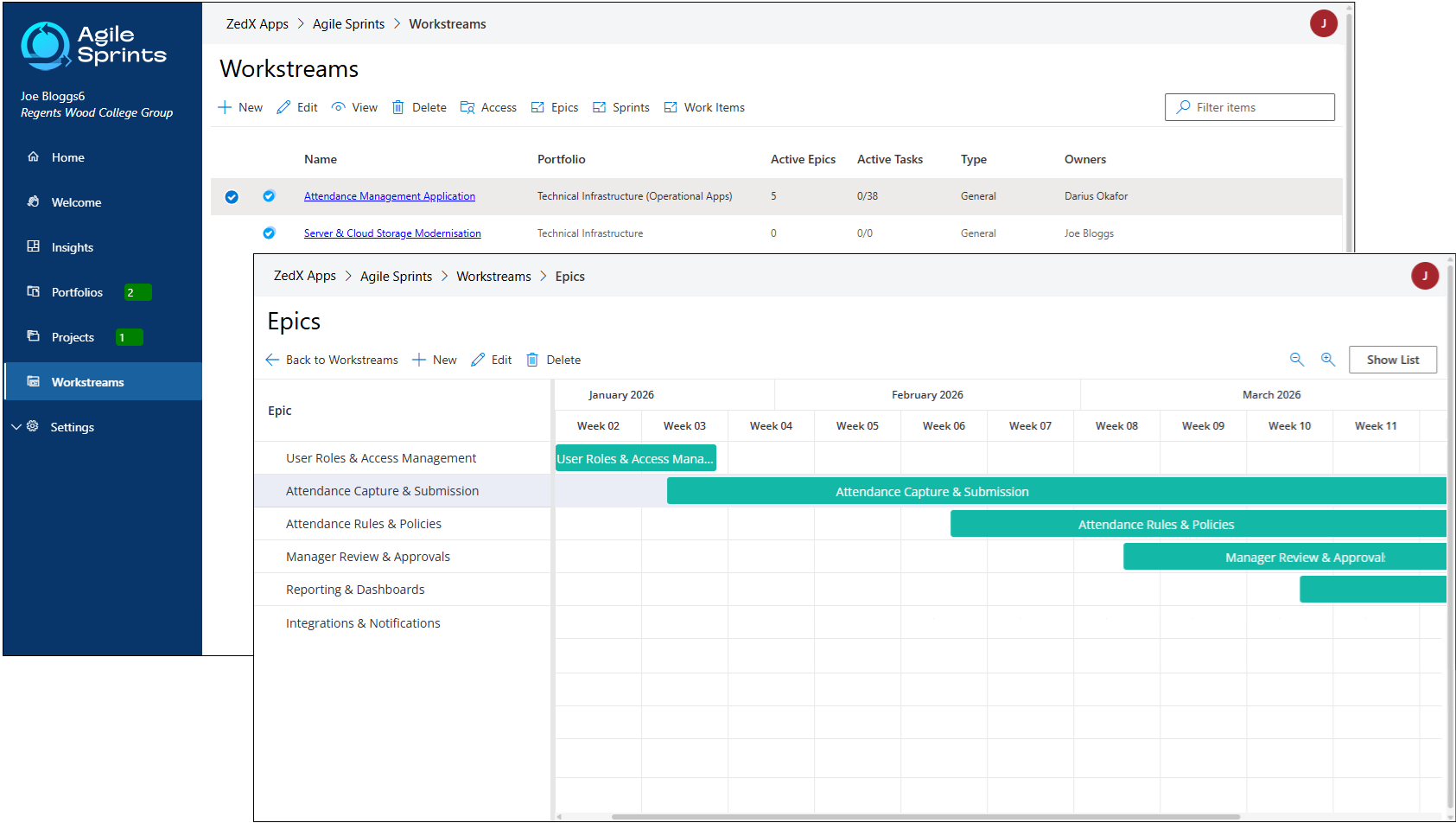
Agile Sprints allows teams to organise work into epics and user stories within a prioritised product backlog.
Stories can be estimated using story points and selected into sprints during planning, providing visibility of scope, capacity, and sprint goals before work begins.
This supports disciplined sprint planning while allowing teams to adapt priorities as requirements evolve.
Image description
Screenshot showing a product backlog with epics and user stories, including story point estimates and the ability to assign stories to a sprint during planning.
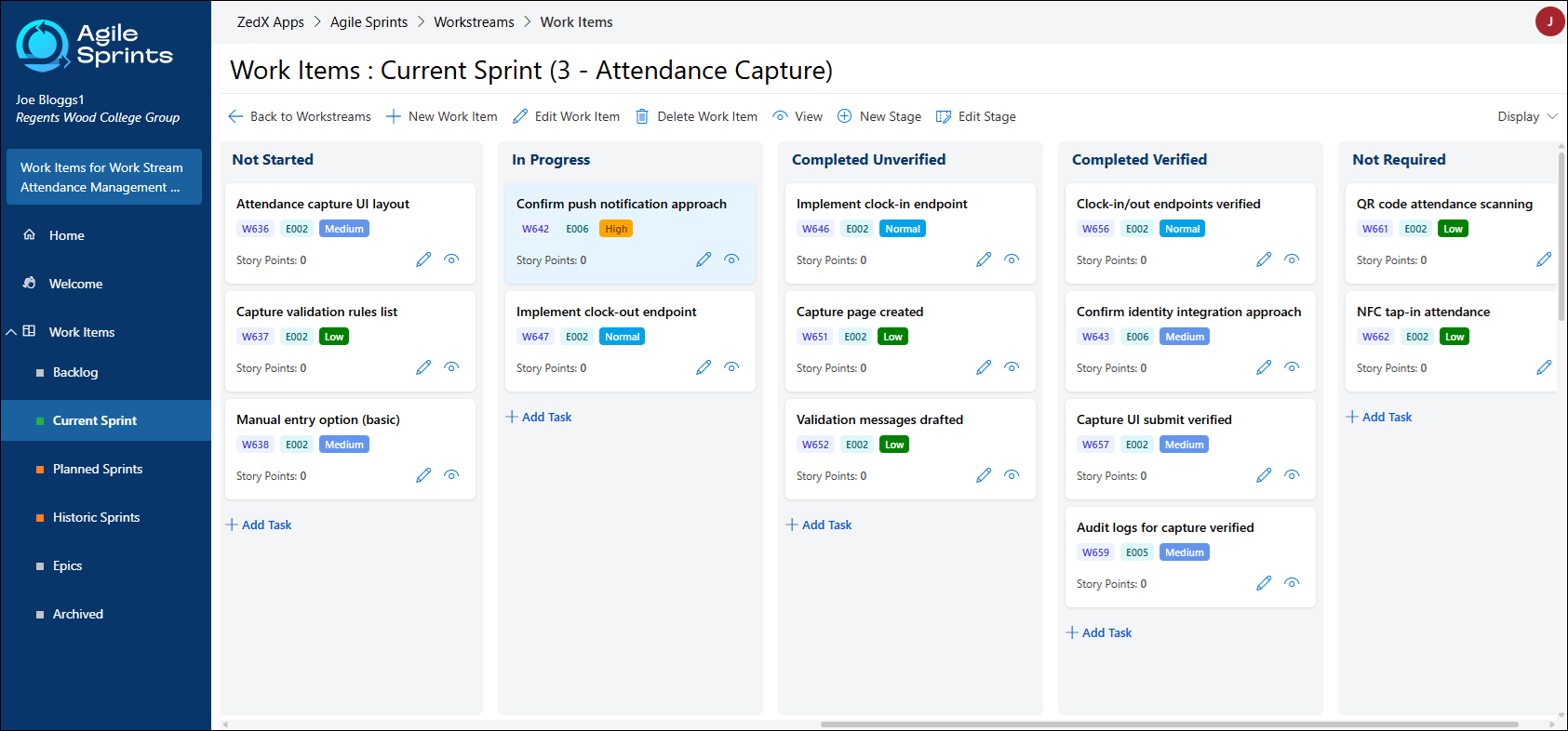
Each sprint is managed using a visual sprint board showing stories as they move through defined workflow stages.
Teams can easily see work in progress, completed items, and blocked work, supporting effective daily stand-ups and collaboration.
Sprint boards remain focused on current delivery, helping teams maintain momentum and avoid distraction from longer-term reporting concerns.
Image description
Screenshot of an active sprint board with stories moving across workflow columns such as To Do, In Progress, and Done.
Agile Sprints provides clear metrics such as sprint completion, velocity, and carried-over work.
Performance trends across multiple sprints help teams improve estimation accuracy, understand delivery patterns, and support continuous improvement.
Metrics are designed to inform teams and encourage learning, rather than to enforce control or performance pressure.
NOTE Image description
Dashboard view showing sprint velocity, completion rates, and trends across multiple sprints.
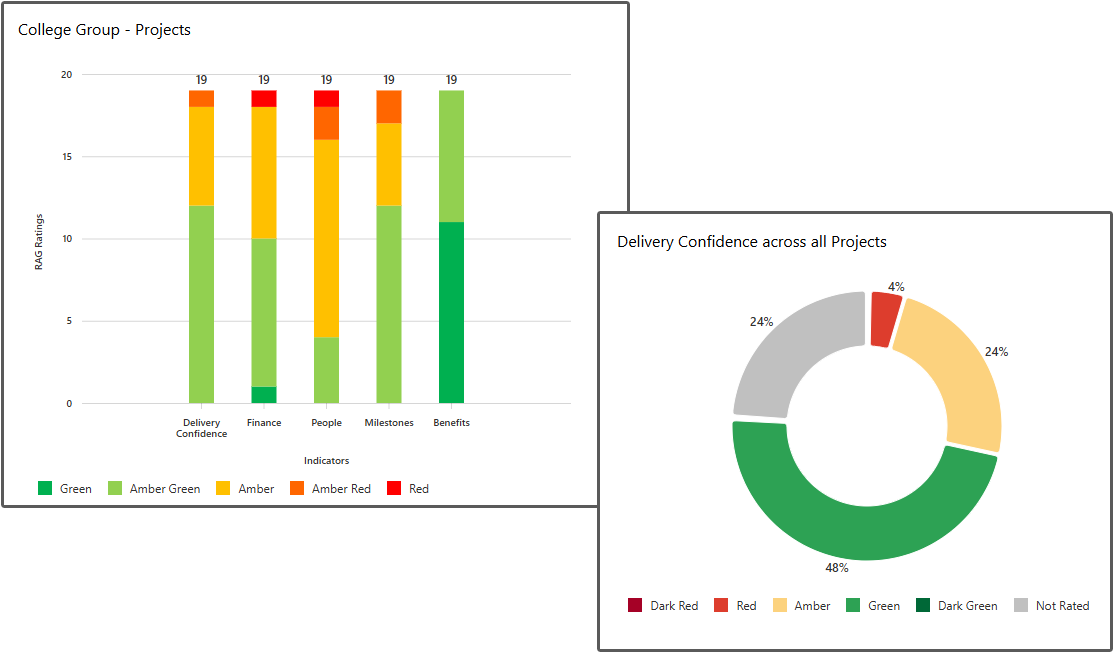

Agile Sprints can be used independently by delivery teams or linked to Project Portfolios where sprint-based work contributes to wider project and portfolio reporting. Sprint progress is summarised through periodic updates without exposing task-level detail.
Teams running mixed delivery models can use Group WorkStreams alongside Agile Sprints. This keeps sprint delivery focused while allowing operational and ad-hoc work to be managed separately.