
A Clear oversight and consistent reporting across portfolios, programmes, and projects
Project Portfolios is a dedicated ZedX application designed for organisations that need clarity and confidence across all projects.
It provides a structured way to manage vision and objectives and to organise portfolios, programmes, and projects beneath them. The application focuses on consistent reporting and meaningful oversight seamlessly with ZedX Agile Sprint and ZedX Group WorkStreams or external applications for day-to-day task management.
By standardising how progress, risks, and delivery confidence are reported, Project Portfolios helps leadership teams stay aligned to strategic intent while reducing reporting effort for delivery teams.

Manage vision statements with clearly defined objectives

Organise all projects into portfolios and programmes

Ensure project managers provide structured periodic updates

View dashboards showing critical delivery metrics

Track delivery timelines using a portfolio-level Gantt view

Export project and portfolio data to Excel

Send automatic reminders for project updates

Organise projects further into workstreams where required

Manage and track project benefits after delivery
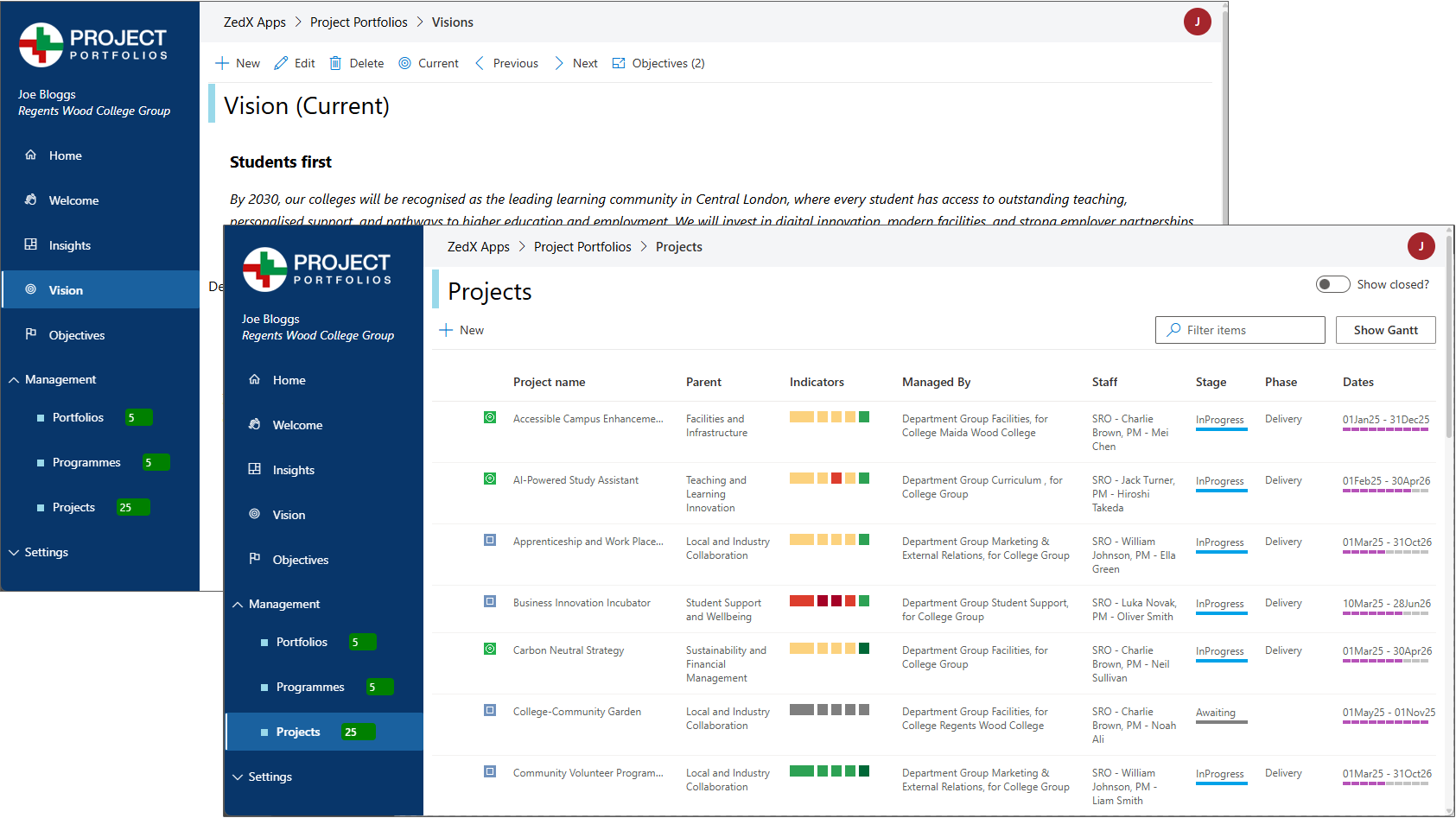
Project Portfolios allows organisations to capture vision statements and define clear objectives, which are then realised through portfolios, programmes, and projects explicitly linked to them.
Projects may sit directly within portfolios or be grouped under programmes where additional coordination or oversight is required. This reflects how organisations actually operate, without imposing unnecessary structure.
This approach ensures delivery activity remains clearly connected to intended outcomes, rather than reporting progress in isolation.
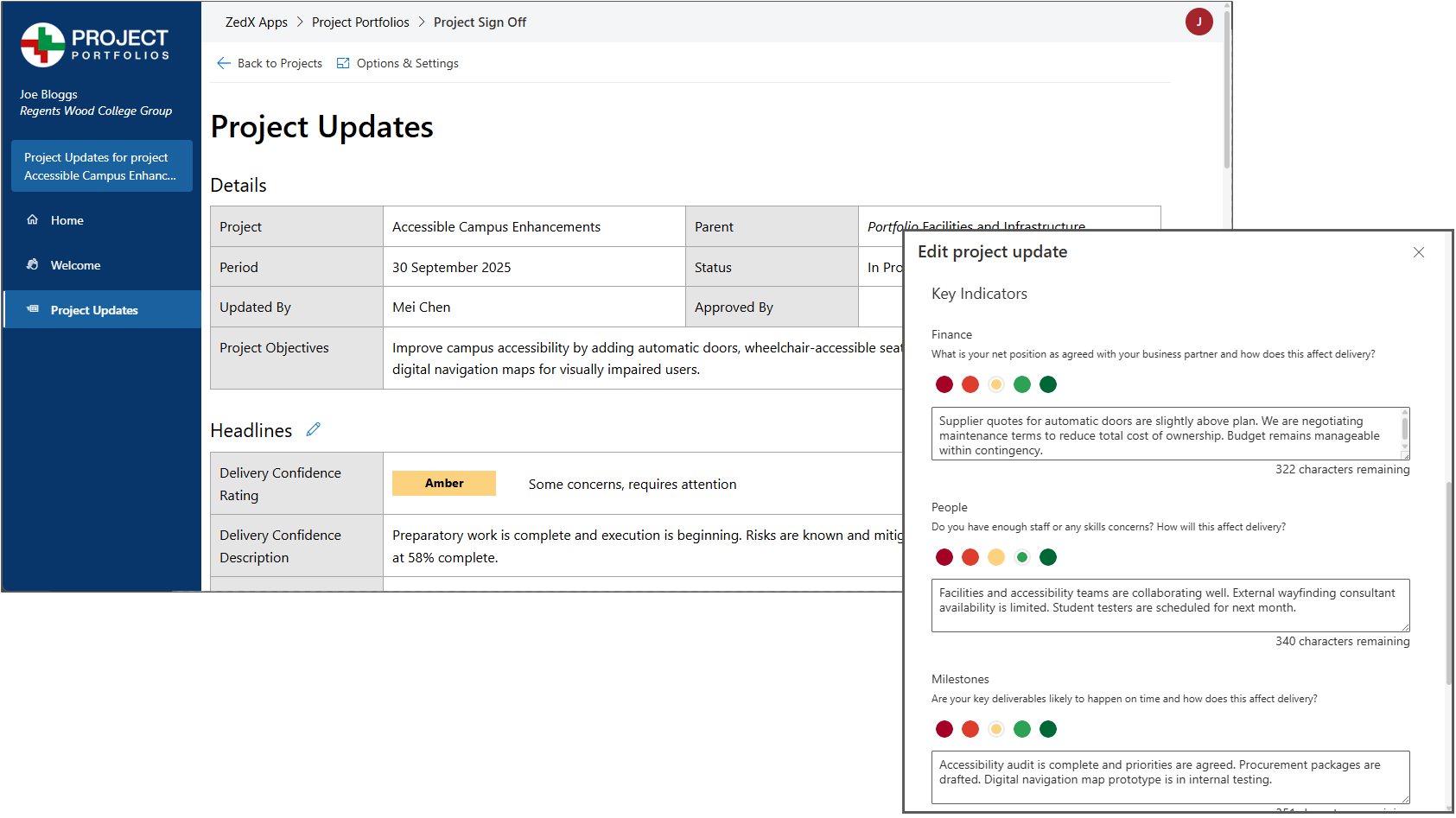
The Project Portfolios Updates function ensures that project managers provide structured, periodic updates. Updates are submitted at agreed intervals, such as monthly or quarterly, using a consistent format.
Updates typically include delivery confidence using RAG status, narrative progress, key achievements, blockers, risks, dependencies, and support required.
This removes the need for ad-hoc status chasing while ensuring leadership teams receive reliable, comparable information across all projects.
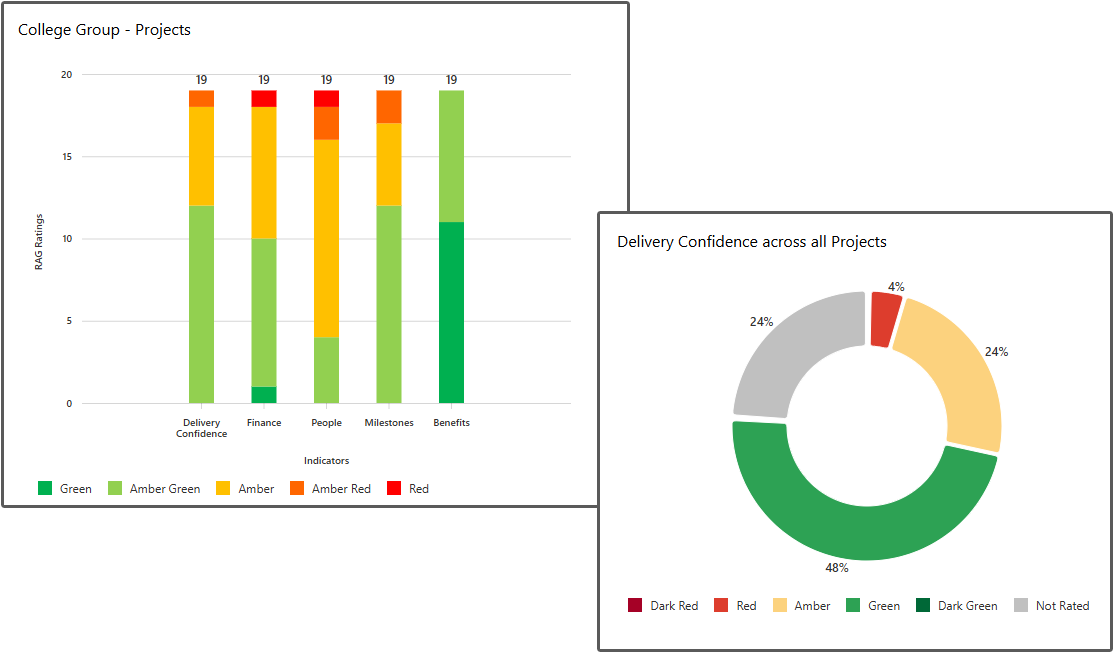
Dashboards provide an aggregated view of delivery health across portfolios, programmes, and projects. Leadership teams can quickly identify where confidence is strong and where attention is required.
Trends over time show whether delivery confidence is improving, stable, or deteriorating, helping teams focus on material risks rather than surface-level reporting.
The emphasis is on clarity and exceptions, enabling informed intervention without reviewing every project in detail.

Where projects require structured Agile delivery, workstreams can be linked to Agile Sprints. Scrum teams manage epics, stories, and sprints in a dedicated environment, while Project Portfolios maintains oversight through periodic reporting rather than task-level detail.
For teams working in a continuous-flow or operational model, project workstreams can be linked to Group WorkStreams. This supports Kanban-style task management for ad-hoc or non-Scrum work, with progress summarised through structured project updates.
Projects can be linked to Audit Actions where delivery activity is driven by audit recommendations or assurance findings. Actions are managed and evidenced separately, while Project Portfolios retains visibility of progress and delivery confidence.
Where projects carry material risks or recurring issues, these can be managed in the Risk Register application. Risks remain actively owned and monitored, while Project Portfolios references them within project updates to provide leadership with clear visibility of exposure.